Two of the collection’s most precious objects are the corbel (in the form of an angel), and a separate round stone which is currently used as a base for the corbel to sit on.

The corbel and stone were gifts to our Priory from the Order in England. They were presented when the then Lord Prior, Lord Wakehurst (a former Governor of NSW), had come from London to Canberra in 1966, to lay the foundation stone of the former Priory Headquarters Building on Canberra Avenue.
These objects are both essential links to the Priory in England, and to the medieval Order.
The angel is a corbel – a decorative solid loadbearing bracket used in building construction. Our angel comes from the St John’s Gate building (not the nearby church of St John), and was carved in the 16th century.
The angel’s clothing is interesting — the scalloped cuffs of the sleeves of its robe are folded back; it is wearing a headband or crown with a prominent cross; and it has a large, plain, square pectoral cross suspended from a chain around its neck. Though it has shoulder-length hair, we cannot tell if it is meant to be male or female because it is androgynous — combining physical features of both sexes.
While the Australian Office of St John occupied the former Priory HQ Building (1967–2008), the angel was positioned above the main entrance of the Elsa Albert Hall, the large assembly room at the centre of the building.
The round block of stone that the Angel now sits on, is an original piece of a pillar from the St John Priory Church in Clerkenwell. (The current Priory Church is opposite the familiar St John’s Gate and retains the 12th Century crypt.) The Church has a rather convoluted history (as expected given its centuries-long story) but the stone is from the former parish St John church building which was destroyed by German bombing in 1941.

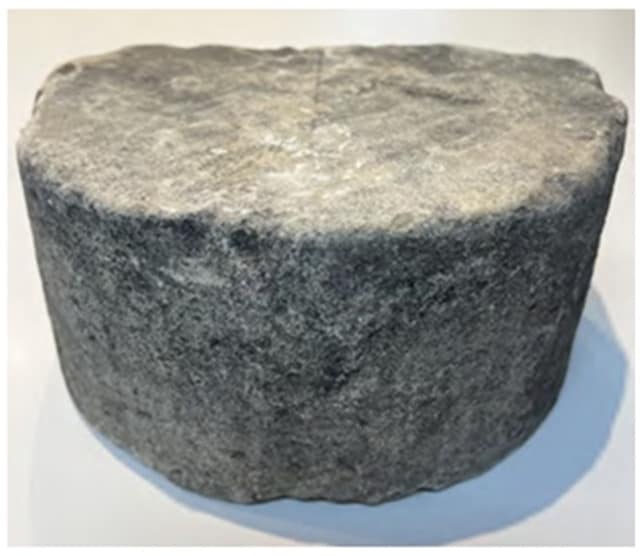
Both the corbel and stone are Caen limestone from Normandy, of which much of early London is constructed.
In the new Australian Office, the corbel rests upon the smaller stone, in an illuminated display case. The explanatory plaque (below) was removed from the old Priory HQ and is now displayed near the corbel.

Further information on other Priory Stones held by Australian States and Territories can be found in – Heiermann, Pam. In search of the Australian Priory stones. St John History, 2024, vol 21, pp 157-167.